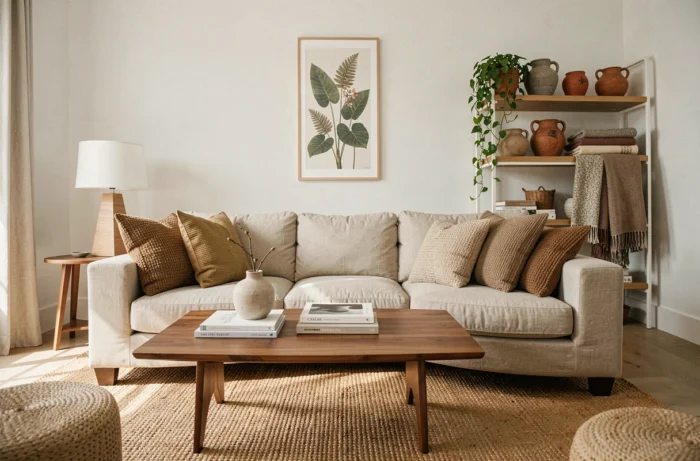
We are looking for a light fixture for the living room, but we end up in a “bedroom” section, then we veer off to wall art without having found what we wanted. Navigating through the categories of an online decor site requires a minimum of reference points to avoid wasting time, especially when the offerings cover dozens of pieces and styles.
Online decor product sheets: what the sections don’t always show
When browsing a furniture or decor section, we spontaneously compare visuals, dimensions, and prices. However, one piece of information is often missing from product sheets: the exact composition and emissions of the furniture.
The ADEME reminds us that furniture and decor products can emit pollutants. Paints, varnishes, particle boards: every finish matters. Labeling for volatile organic compound (VOC) emissions is more systematic for paints and coatings than for the furniture itself.
Specifically, if we buy a coffee table or a sideboard online, the product sheet rarely mentions the emission level. Comparing two pieces based on this criterion requires contacting customer service or searching for certification in technical documents. A decor site that structures its sections by material (solid wood, MDF, lacquered metal) makes this sorting easier. This is a point to check before allowing oneself to be guided solely by style.
To identify the available categories on a dedicated decor portal, you can explore the site cote-deco.fr and view the complete structure of the proposed sections.
Sections by room or by style: two decor navigation logics
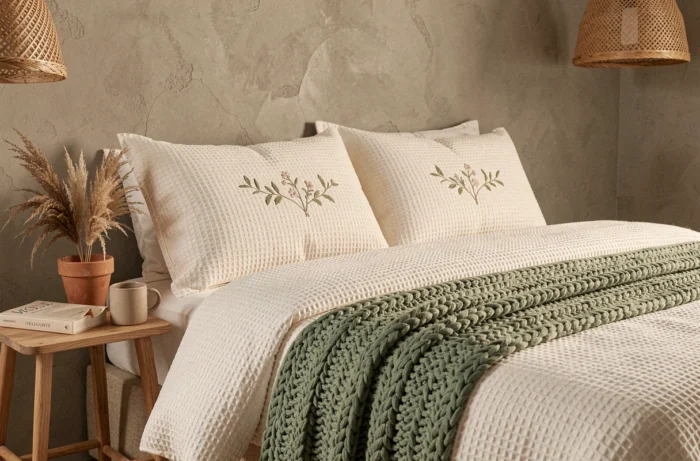
Most interior decor sites organize their content along two axes. The first classifies ideas and products by room: living room, bedroom, bathroom, kitchen. The second groups everything by style: Scandinavian, bohemian, art deco, contemporary.
The two approaches serve different needs. Navigating by room helps when renovating a specific space. You know you want a piece of furniture for the dining room, so you filter directly. The “living room” section focuses on sofas, coffee tables, ambient lighting, and wall objects, which avoids encountering items related to countertops.
Navigation by style: useful for overall coherence
When you want to harmonize the entirety of an interior, navigating by style becomes more effective. You select “minimalist” or “industrial” and get a cross-sectional view, from the entryway light fixture to the bedding. The risk: falling into a catalog that is too broad where each product carries the style label without real coherence in the range.
A good reflex is to combine the two filters. First, identify the room to be furnished, then refine by trend. Sites that allow this dual sorting save considerable time compared to those that impose a single entry point.
Furniture, lighting, art objects: prioritizing your online decor purchases
Faced with the vastness of the sections, one can quickly accumulate items in a cart without an overall plan. Starting with the structural pieces avoids proportion errors. A sofa, a dining table, or a main storage unit sets the framework. Lighting and decorative objects then come to complete the ambiance.
Here are the categories to prioritize in this order:
- Seating and dining furniture, which determine circulation in the space and daily comfort
- Storage (sideboards, shelves, consoles), which condition the quantity of visible objects and the impression of order
- Lighting, whether a pendant or a table lamp, which radically changes the perception of colors and volumes
- Textiles (curtains, cushions, rugs), which add warmth and visually connect the other elements
- Art objects and wall accessories, which personalize the space once the rest is in place
This sequence is not a dogma. But buying a designer vase before choosing the table on which it will sit is like choosing earrings before the dress.
Reuse and second-hand: a decor section in its own right
The “second-hand” or “used” sections are multiplying on decor and furniture sites. Reuse is becoming professionalized, with organizations documenting the condition, composition, and sometimes the history of the pieces. Not all second-hand channels offer the same transparency regarding this information.
On a platform specialized in reuse, you generally find detailed photos, a description of defects, and an indication of materials. On a general secondary market or flea market, this data is often absent. You buy by sight, which works for a decor object but becomes risky for a structural piece of furniture.
Eco-contribution and REP furniture channel
The purchase of new furniture online includes an eco-contribution related to the REP (extended producer responsibility) for furniture. This contribution finances collection and processing at the end of life.
When comparing a new piece of furniture and a second-hand one, the price displayed for new includes this eco-contribution, while the second-hand is exempt from it. This does not automatically make second-hand cheaper if the piece is rare or restored, but it is a comparison parameter that decor sections rarely mention.
Air quality and decor choices: the invisible criterion
We mentioned VOC emissions earlier. In practice, this criterion influences how we should read online decor sections. A “wall paints” category that classifies by hue without mentioning the A+ certification leaves the consumer without a health reference.
The most comprehensive sites integrate a filter by label or emission level. This is not yet the norm, but sections that offer this sorting deserve attention. A well-decorated interior that degrades air quality is not a successful interior.
Online decor portals gain depth when their sections go beyond mere aesthetic criteria. Checking the traceability of materials, combining filters by room and style, prioritizing purchases from structural to accessory: these reflexes transform a browsing session into a real decor project, coherent from floor to ceiling.