
Fashion and lifestyle trends for women are evolving under the influence of regulatory, technological, and environmental factors that are reshaping shopping habits. In 2026, three underlying movements are transforming wardrobes and consumption choices: the legislative framework for ultrafast fashion in France, the rapid growth of upcycled fashion, and the arrival of digital tools that change the way clothes are discovered and tried on.
Anti-ultrafast fashion law: what the French legal framework changes for consumers
French law introduces for the first time a legal definition of ultrafast fashion. This text directly targets brands that renew their collections at a very high rate, often through social media and influencer campaigns.
For consumers, this legislation has concrete effects. Targeted brands will have to comply with new transparency obligations regarding their production conditions. The displayed price will no longer only reflect the manufacturing cost but also the regulatory constraints related to environmental impact.
This framework mechanically pushes towards less frequent purchases and more durable pieces. A dress or pants bought in this context responds to a different arbitration: the quality-price ratio is now also measured by the manufacturer’s compliance. Finding all the news from the E-woman site allows tracking these regulatory developments and their impact on clothing choices over the seasons.
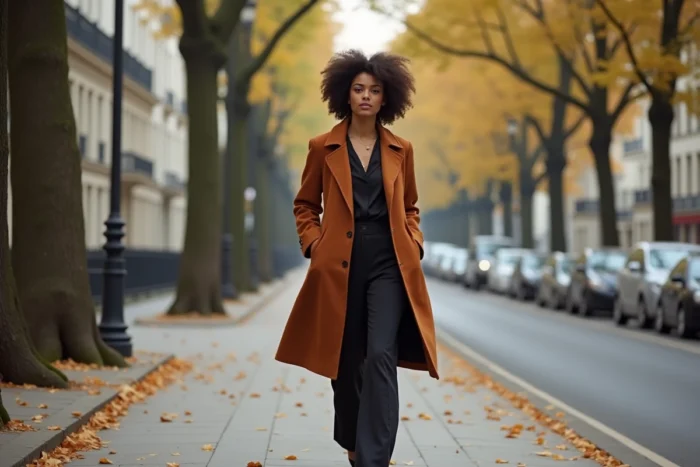
Upcycled women’s fashion: a segment with strong structural growth
The global upcycled fashion market is rapidly growing, with the women’s segment representing the largest share. According to Fortune Business Insights (report published in 2024), this female segment accounted for 44.19% of the global market in 2026.
This figure reflects a change in behavior. Consumers are no longer turning to upcycling solely out of activism. The pieces offered compete with classic ready-to-wear in terms of cut, finishes, and style.
What makes upcycling accessible today
Several technical factors are accelerating this adoption:
- AI-assisted design allows creators to visualize and optimize patterns from recovered textiles, reducing raw material waste.
- Digital fitting rooms give buyers the opportunity to virtually try on an upcycled piece before ordering, which reduces returns and facilitates online shopping.
- Increased transparency in supply chains reassures about the origin of materials and the quality of the finished product.
The result: a woman looking for an original outfit for the season can find unique pieces in upcycling, often at a price comparable to that of classic mid-range.
Circular textile economy in Europe: repercussions on the wardrobe
Beyond upcycling, the entire circular textile economy is gaining momentum. A KPMG and Fashion Federation study estimates that this market could exceed 100 billion euros in Europe by 2030, with a strong focus on women’s ready-to-wear and accessories.
This projection is not abstract. It is already reflected in the multiplication of resale platforms, clothing rental services, and textile repair services. Traditional brands are integrating these circuits into their offerings.
Colors and materials dominating this season
The spring-summer 2026 collections confirm a return to bright colors after several seasons of neutral tones. The runways in Milan and Paris showcased bold shades (orange, pink, yellow, olive green, sky blue) on reimagined natural materials: structured linen, fluid silks with refined finishes.
The long fluid dress remains a central piece. Worn with minimalist accessories, it adapts well to both casual contexts and more formal occasions. Structured wide-leg pants are establishing themselves as the comfortable alternative to slim jeans, with a cut that works on all body types.

Women’s style and digital tools: how technology is changing clothing choices
Virtual fitting and algorithmic recommendations are no longer gadgets. These tools are changing the way women compose their looks season after season.
Digital fitting rooms, integrated into online sales sites, allow users to overlay a garment onto their own silhouette via their phone camera. The return rate decreases, and satisfaction increases because the buyer visualizes the actual fall before confirming.
Artificial intelligence also intervenes upstream. Some tools analyze the content of an existing wardrobe (photographed by the user) and suggest complementary pieces based on colors, cuts, and seasonal trends. Fashion advice becomes personalized without going through a stylist.
What this changes for the fashion budget
Buying less but better is no longer just a slogan. Digital tools allow checking the compatibility of a new piece with the rest of the wardrobe before purchase. The cost per outfit worn decreases when each garment fits into multiple combinations.
Online women’s magazines play a complementary role by deciphering these tools and testing their reliability. Regular reading of a specialized media helps distinguish useful innovations from mere announcements.
The convergence of legislation, circular practices, and digital tools is redefining women’s relationship with fashion. Style is no longer built solely in boutiques or on runways, but also through informed choices regarding sustainability, provenance, and compatibility with an existing wardrobe. The upcoming seasons will confirm whether these trends take root in habits or remain confined to a niche of informed consumers.