A productive vegetable garden relies less on the volume of work done than on the precision of interventions. Successfully managing your vegetable garden and maintaining your garden over time requires mastering a few technical levers that general guides often overlook, starting with the biological life of the soil and the regulatory framework that now governs all phytosanitary interventions.
Phytosanitary regulations in the garden: what remains allowed
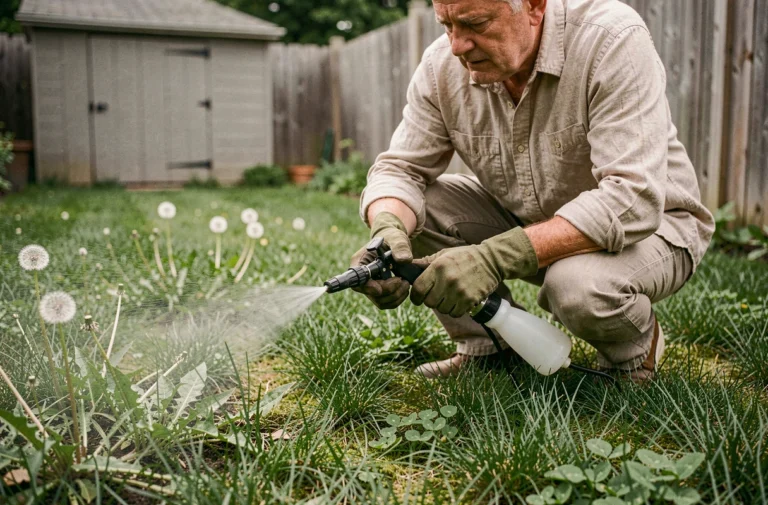
Since January 1, 2019, individuals can no longer purchase, hold, or use most synthetic phytopharmaceutical products. Only biocontrol products, low-risk products, or those usable in organic farming remain accessible, provided they carry the label “Authorized for garden use” and are listed in the official E-Phy database of Anses.
We recommend systematically checking this database before any purchase. An old container stored in the garage for several years could constitute an infringement if the product has been withdrawn from the market. Preventive measures now take precedence over curative ones: crop associations, rotation of beds, choice of resistant varieties.
This legal constraint encourages a rethinking of vegetable garden maintenance around biocontrol. Plant extracts, beneficial insects (lacewings, ladybugs), insect nets: these solutions require early implementation, well before the appearance of pests. Treating a declared problem, as was done with synthetic products, is no longer a viable option for amateur gardeners. The resources available on dededanssonjardin.com illustrate this preventive approach applied to different species in the garden.
Soil fertility in the vegetable garden: managing biology rather than chemistry
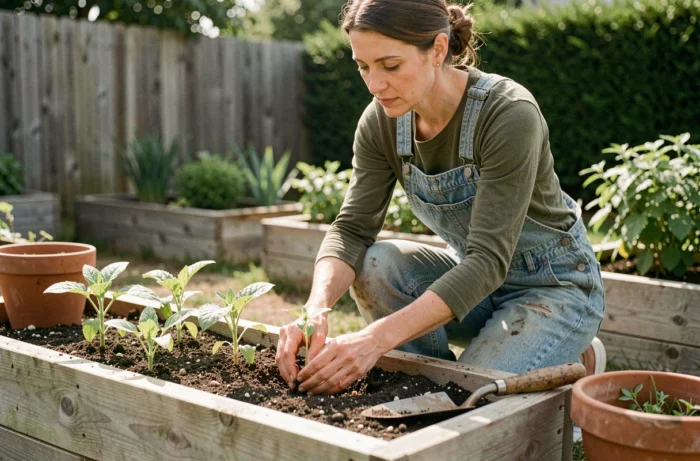
A fertile vegetable garden soil is not one that is turned over every year. Deep tilling destroys the fungal structure and earthworm galleries, two elements that condition water circulation and nutrient availability for vegetables.
We observe better results with superficial work using a broadfork, limited to the top ten centimeters, followed by a surface application of compost. The soil naturally restructures itself through biological activity if given time.
Covering the soil between crops
A bare soil is a degrading soil. Between two series of vegetables, sowing green manures (mustard, phacelia, rye) helps to fix atmospheric nitrogen, limit leaching, and nourish the soil fauna. These covers are mowed before they go to seed and left as mulch in place.
The alternative to sowing green manures is organic mulching: straw, hay, dead leaves, chipped branches. The layer must be thick enough to block the germination of weeds while allowing water to infiltrate. Mulching a cold soil in spring is counterproductive, as it slows down the warming of the earth and delays sowing.
Watering the vegetable garden: managing water with precision
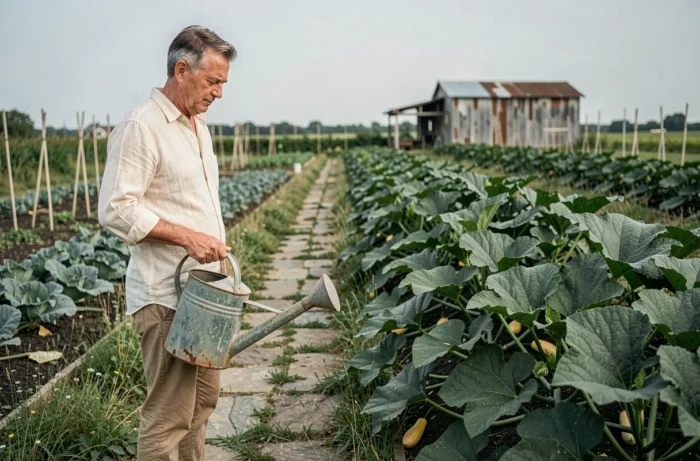
Watering is the area where waste is most frequent. Watering at the base and deeply, less often, is better than light daily watering. Superficial watering keeps roots near the surface and makes plants dependent on constant inputs.
Drip irrigation remains the most economical method. A simple porous hose laid at the foot of the rows, fed by gravity from a rainwater tank, is sufficient for most domestic vegetable garden areas.
Rainwater: a regulated use
Since the decree of July 12, 2024, rainwater is considered unsuitable for human consumption, but its use for watering the vegetable garden remains allowed. For vegetables consumed raw (salads, radishes, tomatoes), we recommend watering exclusively at the base, without wetting the foliage, and then washing the harvests with potable water before consumption.
- Install the tank in the shade to limit the development of algae and bacteria in the stored water.
- Filter the downspout with a grid to avoid the accumulation of organic debris.
- Purge the tank at least once per season to eliminate bottom deposits.
Sowing and seedlings: adapting your supply strategy
Gardeners are increasingly turning to the purchase of ready-to-transplant seedlings rather than sowing seeds, according to a survey by the SNHF conducted in 2025. This shift is explained by time savings, but also by the increasing difficulty of successfully sowing certain seeds without suitable equipment (heated mini-greenhouse, supplemental lighting).
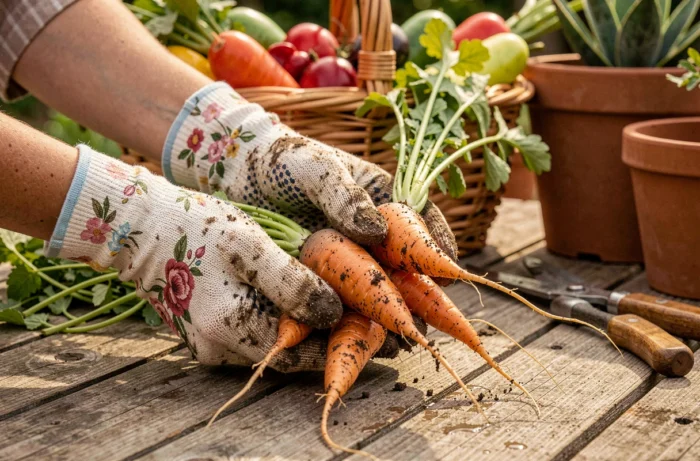
Direct sowing in the ground remains relevant for root vegetables (carrots, turnips, radishes) and cucurbits, which do not tolerate transplanting well. For solanaceae (tomatoes, peppers, eggplants), seedlings purchased from a local producer offer a better success rate than home sowing done without temperature control.
Reproducible seeds or F1 hybrids
The choice between reproducible seeds and F1 hybrids has a direct impact on medium-term vegetable garden management. Reproducible varieties allow for reseeding year after year from one’s own seed harvest. F1 hybrids often produce more uniform and sometimes more resistant plants, but their seeds do not faithfully reproduce the characteristics of the parent plant.
- Favor reproducible varieties for species you grow every year (beans, lettuces, heirloom tomatoes).
- Reserve F1 hybrids for situations where specific resistance to a local disease is documented.
- Store seeds in a cool, dry place: germination duration varies from two to five years depending on the species.
A well-managed vegetable garden is not just about planting at the right time. The quality of the soil, adherence to regulatory frameworks, and precise water management form a triptych that conditions the harvest much more than the number of varieties grown. It is better to have four well-managed beds than an entire garden left to the whims of watering and improvised treatments.