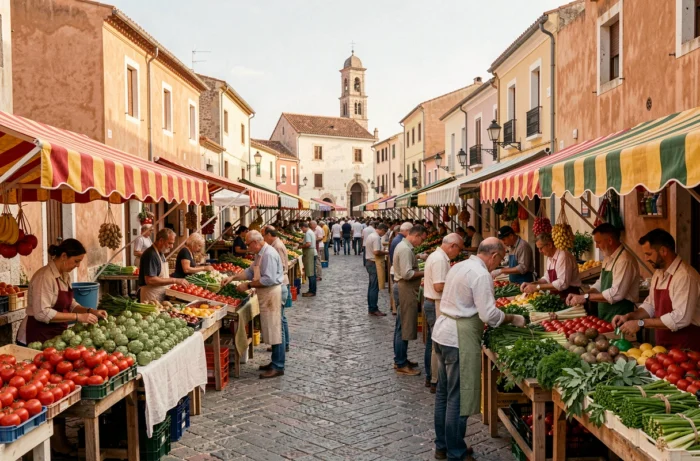
Porto Torres is not the first city that comes to mind when thinking of Sardinia. Located on the northern coast of the island, facing the Gulf of Asinara, this small port town thrives on a market that is a significant part of its local identity.
Seafood, sheep’s cheese, sun-soaked vegetables: the Porto Torres market is a condensed version of what Sardinia does best in terms of gastronomy and friendliness.
Porto Torres between industrial conversion and neighborhood life
Before discussing the stalls, it is essential to understand the context. Porto Torres is still marked by the unfinished conversion of its former petrochemical hub. According to Avvenire, fifteen years after the protocol for transitioning to green chemistry, only two of the seven planned industrial sites have been completed. This sluggishness weighs heavily on the local economy.
The market then takes on a special role. In a city where industrial activity is stagnant, local shops and food markets become economic anchors for the residents. They are not just places to shop: they are spaces where news circulates, where the prices of the day’s fish are negotiated, and where local producers find a direct outlet.
Discovering the atmosphere of the Porto Torres market allows one to grasp this close link between a changing territory and its inhabitants who maintain commercial habits rooted for generations.
Sardinian products from the Porto Torres market: what distinguishes the stalls
Have you ever tasted a pecorino sardo bought in a supermarket? The same cheese, purchased from a shepherd at a Sardinian market, is entirely different. The difference lies in the milk, the aging process, and the fact that the producer can tell you which municipality their sheep come from.
Cheeses and cold cuts
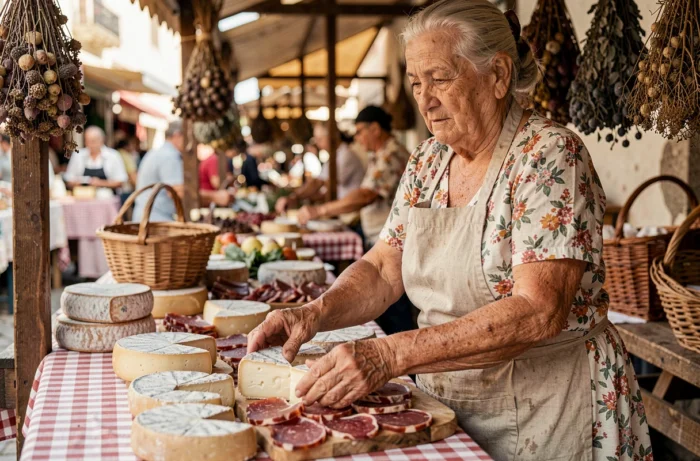
Pecorino dominates the stalls in several forms: fresh, semi-aged, or aged for several months. The older it gets, the more crumbly its texture becomes and the more intense its flavor. There is also fiore sardo, a pressed cheese smoked with heather wood, typical of the island’s interior but sold on the northern coast.
On the cold cuts side, salsiccia sarda (sausage flavored with wild fennel) and guanciale from Sardinian black pigs are worth a try. These products do not always carry standardized labels, which can be confusing, but this is precisely the sign of small-scale artisanal production.
Fish and seafood
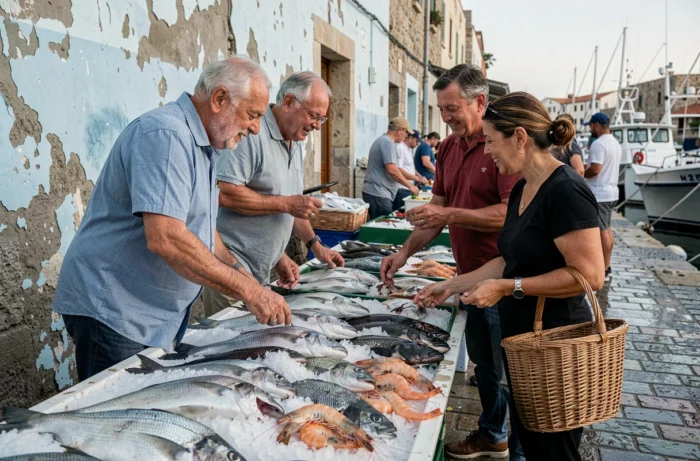
Porto Torres is an active port where fishermen often sell their morning catch. Red mullets, octopuses, sea urchins in season, and langoustines: the variety depends on the day and the weather. The crystal-clear waters of the Gulf of Asinara give the fish firm, low-fat flesh.
If you don’t know how to prepare a product, asking the seller is part of the ritual. The recipe will come with the price.
Fruits, vegetables, and herbs
Beef heart tomatoes, spiny artichokes (carciofo spinoso sardo), and round eggplants occupy a central place. Wild herbs harvested from the maquis (myrtle, rosemary, thyme) are used both in cooking and in herbal teas.
- Myrtle is used to flavor liqueurs, roasted meats, and some traditional Sardinian desserts.
- Spiny artichokes are eaten raw with lemon and olive oil, or braised Sardinian-style with garlic and parsley.
- Local tomatoes, grown in open fields, are significantly more flavorful than greenhouse varieties imported from the mainland.
Seafront and urban redevelopment in Porto Torres
The market does not operate in isolation. Its future is linked to the transformation of the seafront. A redevelopment project for via Mare plans to widen pedestrian spaces, create a more welcoming urban boulevard for businesses, and add greenery.
This redevelopment could change how residents access the market and local shops. A pedestrianized seafront attracts more strollers, benefiting the stalls located nearby. The link between urban planning and food commerce is direct: the more pleasant the space, the longer people linger and buy.
Additionally, a Summer School organized in 2026 highlighted the reuse of the city’s industrial wastelands. Nautical and shipbuilding activities are presented as development levers. If these projects come to fruition, Porto Torres could see new residents and workers arrive, which would strengthen local demand for food markets.
Practical tips for enjoying the market as a visitor
Arriving early makes all the difference. The best products sell out quickly, and the Sardinian heat makes shopping difficult after late morning. Here are some practical pointers:
- Bring a cooler bag if you buy cheese or fish, especially in summer. Temperatures rise quickly.
- Prefer vendors who have only a few products: this is often a sign of a direct producer, not a reseller.
- Don’t hesitate to taste before you buy. Refusing to let you taste a cheese is unusual and should raise a red flag.
- Keep cash on hand: not all stalls accept credit cards.
Porto Torres is about a twenty-minute drive from Sassari, the major city in northern Sardinia. The road is straightforward and well-marked. If you are staying in Castelsardo or on the Costa Smeralda, the journey remains reasonable for a morning at the market.
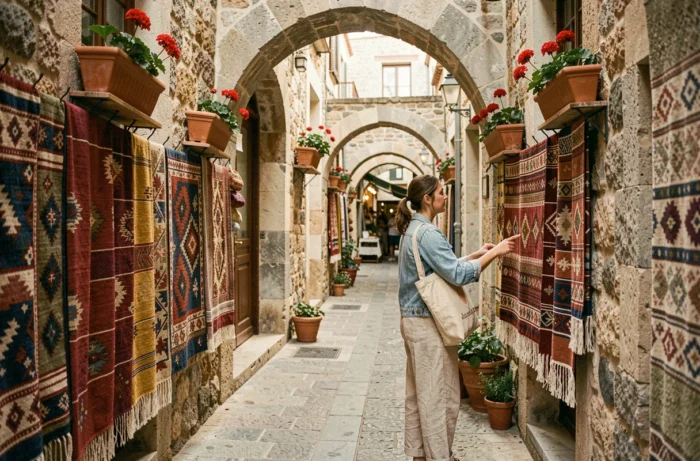
The Porto Torres market does not appear on any rankings of major tourist attractions in Sardinia. This is precisely what makes it an authentic place: the prices remain those practiced for locals, the products are not calibrated to please tourists, and the atmosphere reflects the daily life of a northern Sardinian port city that continues to live at its own pace.