
The DeLonghi Magnifica S produces a decent espresso in automatic mode, but achieving a balanced cappuccino requires mastering a few parameters that the manual does not detail. Extraction time, grind setting, milk temperature: each variable alters the result in the cup. This article analyzes the settings that make the difference between a bland cappuccino and a structured drink, based on feedback from experienced users of the Magnifica S.
Extraction Time and Grind on the Magnifica S: Measurable Variables
The first factor that distinguishes a successful cappuccino from a too-light cappuccino is the concentration of the base espresso. On the Magnifica S, several users report extractions around 10 seconds, which produces a watery coffee, unable to stand up to the volume of frothed milk.
The target to aim for is rather between 20 and 25 seconds of extraction. This longer time allows the coffee to develop its oils and crema, two elements that give the cappuccino its flavor structure.
| Parameter | Insufficient Setting | Recommended Setting | Impact on Cappuccino |
|---|---|---|---|
| Extraction Time | About 10 seconds | 20 to 25 seconds | Too diluted espresso vs concentrated base |
| Grinder Position | Too fine or too coarse | Adjust in increments (about 5 clicks) | Unstable flow vs consistent crema |
| Programmed Water Volume | Default volume (long cup) | Reduce to a minimum for a ristretto | Drowned coffee vs strong base under the milk |
The grinder setting deserves special attention. Field feedback shows that changing the grind while the grinder is running (and not when stopped) helps stabilize the flow and avoid jolts that produce irregular crema. A gradual adjustment, click by click, yields better results than a radical change.
Those looking to understand how to prepare a cappuccino with a DeLonghi Magnifica S often underestimate this point: without a sufficiently dense espresso, even perfect milk foam will not correct the imbalance.
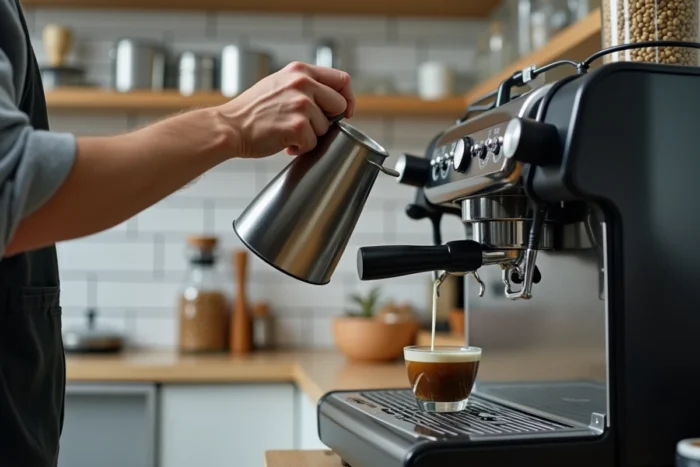
Milk Foam with the Steam Wand: Technique and Common Mistakes
The Magnifica S uses a manual steam wand, which allows for more control than an automatic system, but also leaves more room for error. The quality of the foam depends on three precise actions.
- Purge the steam wand for a few seconds before immersing it in the milk. Residual water in the circuit dilutes the foam and makes it coarse, with large bubbles that fall quickly.
- Position the tip just below the surface of the milk to incorporate air during the first few seconds, then dive deeper to create a vortex that breaks the bubbles and produces dense microfoam.
- Use well-chilled whole milk, taken out of the refrigerator just beforehand. Cold milk offers a longer working window before reaching the ideal temperature (when touched, the pitcher becomes uncomfortable to hold without burning).
The microfoam should have the texture of satin paint, with no visible bubbles on the surface. If the foam resembles bath foam, air has been incorporated for too long or too deeply.
On the other hand, foam that is too compact and thick, which refuses to mix with the coffee, indicates that the milk has been overheated. Beyond a certain temperature threshold, the milk proteins denature, and the foam loses its fluidity.
Descaling and Maintenance of the Magnifica S: Direct Impact on Steam
A problem that recipe tutorials often overlook: the power of the steam wand declines with accumulated scale. On the Magnifica S, the steam circuit shares part of the hydraulic system with the extraction. Even moderate scaling reduces the available steam pressure, which lengthens the frothing time and degrades the milk texture.
Experienced users of this machine report several descaling practices that condition the consistency of the steam:
- Remove the water softener filter from the tank before starting the descaling cycle, otherwise the descaling product is partially neutralized.
- Avoid aggressive household acids (concentrated white vinegar, hydrochloric acid) that can damage internal seals. Prefer a descaler designed for automatic coffee machines.
- Fill the rinsing tray well to allow the machine to reset its electronic sensors. Incomplete rinsing can keep the descaling light on and disrupt subsequent cycles.
Regular descaling is essential to maintain consistent milk foam from week to week. Without it, the quality of the cappuccino fluctuates unpredictably.
The Coffee Grounds Trap Mistake
A recurring malfunction on the Magnifica S often goes unnoticed until a complete blockage occurs: the incorrect use of the ground coffee trap. Adding ground coffee when the machine is off, or pouring an excessive amount, causes a jam or an error message that prevents any preparation.
The solution is to manually clean the entrance of the trap with a fine tool, then restart the machine. This type of blockage has nothing to do with the quality of the coffee or milk, but it interrupts the routine and leads some users to believe that their machine is defective.

Coffee Beans and Filtered Water: Two Choices That Change the Result
The Magnifica S accepts all beans, but the cappuccino highlights the limits of mediocre quality coffee. A blend that is too roasted produces a bitter espresso that, when combined with milk, yields a flat and unnuanced drink.
Medium roasts, with a component of arabica beans, offer more complex notes that persist beneath the foam. The choice of beans influences the final taste more than the machine setting, provided that the extraction remains within the 20 to 25 seconds window.
The quality of the water plays a similar role. Very hard water accelerates scaling and alters the taste in the cup. Using the water filter provided with some models, or low-mineral water, extends the intervals between descalings and stabilizes the aromatic profile.
The cappuccino on the Magnifica S relies on a balance between concentrated extraction, microbubble foam, and regular maintenance of the steam circuit. Each of these parameters can be measured and adjusted independently, making progress methodical and reproducible from cup to cup.