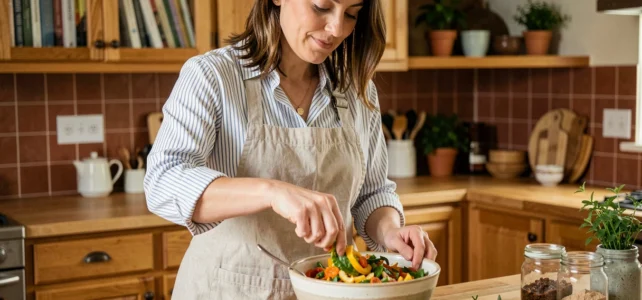
A balanced family meal is based on three components on the plate: half vegetables, a quarter proteins, and a quarter whole or semi-whole grains. This distribution, echoed by most French nutritional recommendations, forms the foundation from which to build quick meals without sacrificing nutritional quality.
Fresh produce on the rise: adapting family recipes to the real budget
Talking about balanced recipes without mentioning the cost of ingredients ignores the main constraint for families. The latest data from Insee shows that in July 2026, the prices of fresh produce increased by about 3.8% year-on-year, driven in particular by leafy vegetables and certain summer fruits. The provisional estimate for August 2026 indicates a rise in fresh produce close to 5.8%, linked to the heatwaves and droughts that affected the harvests.
This reality pushes us to rethink the contents of the plate. Legumes (lentils, chickpeas, dried beans) advantageously replace some of the expensive fresh vegetables while providing plant-based proteins and fiber. A coral lentil dahl with semi-whole rice ticks all the boxes: stable price, quick cooking, solid nutritional contribution.
Seasonal vegetables remain the best defense against inflation. At the end of summer, zucchini, tomatoes, and eggplants cost significantly less than imported green beans. Building menus around the harvest calendar reduces the bill without impoverishing the plate. To explore this logic further, the site offering balanced recipes with Myn Idee on 3 Coups 2 Fourchette develops menus designed around accessible ingredients.
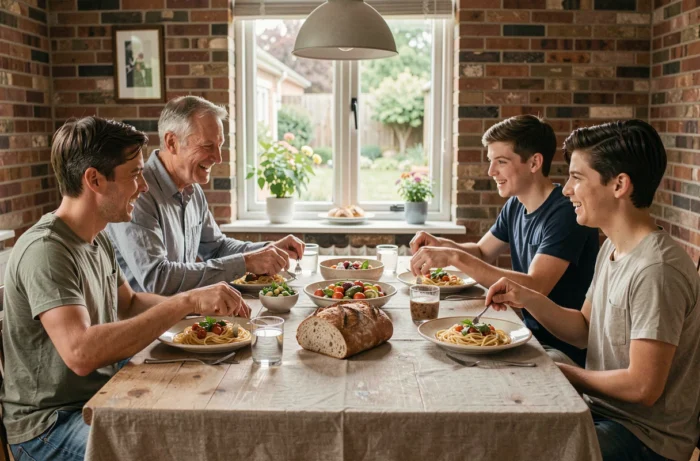
Tripartite plate method: structuring a dinner in under 30 minutes
The difficulty is not knowing the ideal proportions, but applying them on a Tuesday evening at 7 PM with a half-empty refrigerator. The most effective method is to think in three zones on the plate rather than in fixed recipes.
Vegetable zone: the base of a quick meal
Vegetables cooked in a pan or roasted in the oven require little supervision. Cutting zucchini into rounds, seasoning them with olive oil and herbs de Provence, then baking them for twenty minutes at 200 °C only takes five minutes of active preparation. Raw vegetables (grated carrots, sliced tomatoes) also work when time is completely lacking.
Protein zone: varying sources throughout the week
Alternating between animal and plant proteins throughout the week lightens the budget and diversifies the intake. A realistic planning could look like this:
- Two evenings with legumes (green lentils in warm salad, roasted chickpeas with paprika) that cook in twenty minutes without soaking for coral lentils
- Two evenings with fish or poultry, cooked in a pan in ten minutes (cod fillet, turkey cutlet)
- One evening with eggs (vegetable omelet, scrambled eggs), the fastest and cheapest protein on the market
Starch zone: favoring whole versions
Semi-whole pasta, pre-cooked whole rice, whole semolina. Whole starches keep you fuller longer due to their fiber content, which reduces snacking after dinner. Semolina is prepared in five minutes: boiling water, lid, rest.
Weekly meal planning: the anti-improvisation lever
According to an OpinionWay survey for HelloFresh, just over half of parents do not know what they will cook at 5:30 PM. This daily improvisation generates stress, pushes towards ultra-processed dishes, and increases food waste.
Planning does not mean preparing seven elaborate menus on Sunday. It means deciding, in a ten-minute session over the weekend, which proteins and vegetables will be used each evening. The rest can be adjusted.
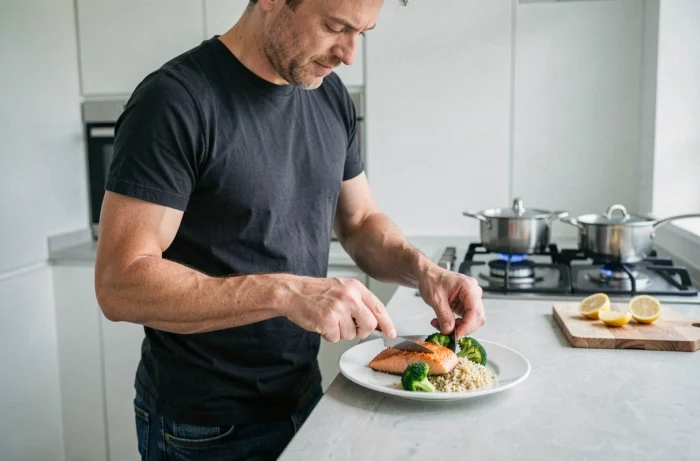
Minimalist batch cooking: preparing bases, not dishes
Classic batch cooking (preparing five dishes on Sunday) discourages many families due to its scale. A lighter version works better over time:
- Cook a large quantity of whole rice or quinoa, usable for three days in the refrigerator
- Wash and cut the week’s vegetables into airtight containers
- Prepare a versatile sauce (homemade tomato sauce, lemon vinaigrette) that will accompany several meals
These bases transform dinner preparation into assembly. Twenty minutes is enough when the ingredients are already ready to cook.
Involving children without slowing down preparation
Assigning an age-appropriate task (washing tomatoes, mixing salad, grating cheese) reduces resistance at mealtime. A child who has participated in the preparation is more likely to accept tasting what they helped make. The real constraint is choosing tasks that do not extend cooking time, hence the interest in simple assembly recipes.
Family balanced recipes: three concrete and adaptable examples
Sautéed zucchini, chickpeas, and whole semolina. Sauté diced zucchini and a chopped onion in a drizzle of olive oil. Add a can of drained chickpeas, cumin, and paprika. Serve on a bed of whole semolina. Total time: fifteen minutes.
Seasonal vegetable omelet and green salad. Beat four eggs with a pinch of salt. Pour over diced bell pepper and tomato already sautéed in the pan. Serve with a salad dressed with rapeseed oil (rich in omega-3). Total time: ten minutes.
Baked semi-whole pasta with salmon and spinach. Mix cooked pasta with fresh spinach wilted in the pan and pieces of salmon. Top with light béchamel, sprinkle with grated cheese, and bake for fifteen minutes. A complete dish that children love thanks to the melted cheese.
These three recipes respect the distribution of vegetables, proteins, and starches and cost less than three euros per person with seasonal ingredients. None require any particular technical skill, and each can be adapted by replacing a vegetable or protein with what is left in the refrigerator.
The consistency of a balanced family menu relies less on the recipes than on the method surrounding them: structuring a plate, anticipating shopping, and accepting simplicity as an asset.