Contacting a support and assistance association for women is not just about dialing a number. The access pathway depends on the type of violence experienced, the administrative status of the person concerned, and the territorial coverage of local services. Here we detail the operational contact channels, their technical specifics, and the points of caution often absent from general guides.
Accessibility of 3919: hours of operation, hearing impairment, and limitations of the service
The 3919 – Violences Femmes Info now operates 24/7, with resources described as “massively increasing” by Minister Aurore Bergé in August 2026. This extension of hours changes the game for women who can only call at night or on weekends.
The 3919 is not an emergency number. It provides listening support, delivers first-level legal information, and directs individuals to local support services. In situations of immediate danger, the only recourse remains 17 (police/gendarmerie) or 114 (via SMS, for deaf or hard-of-hearing individuals).
For women with hearing impairments, the platform is accessible via the RogerVoice app and the Solidarité Femmes website, during dedicated hours from Monday to Friday from 8:30 AM to 7 PM. This technical detail is rarely mentioned in standard orientation pages, even though it conditions real access to the service for part of the affected audience.
For women who wish for additional local support, it is possible to access the Des Femmes Entrelles website to directly contact a local structure specialized in listening and support.
CIDFF and legal clinics: how to identify the right local contact
The Centres d’Information sur les Droits des Femmes et des Familles (CIDFF) serve as the reference network for access to rights. Each department has at least one CIDFF, but the nature of the services varies significantly from one center to another.
Some CIDFFs offer free legal clinics with a lawyer specialized in family law. Others limit themselves to general information provided by salaried legal professionals. We recommend checking directly with the relevant center about the qualifications of the staff and the frequency of the services before visiting.
Distinguishing between listening services and legal clinics
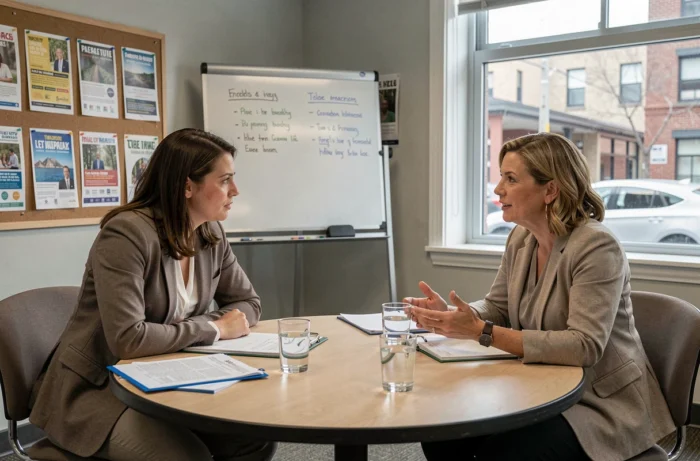
A listening service does not have the same scope as a legal consultation. The listening aims to give voice, assess the level of danger, and provide guidance. The legal clinic, on the other hand, allows for obtaining precise information about rights (protection orders, filing a complaint, legal aid).
Both are complementary, but confusing the two often delays the process. During the first phone contact, specifying the nature of the need (listening, legal information, emergency accommodation) allows for being directed to the right service.
- Listening service: walk-in support at most CIDFFs, provided by professionals trained in psychosocial support.
- Legal clinic: by appointment, often weekly, with a legal professional or lawyer. Bring any useful documents (complaint, medical certificate, attestations).
- Specialized domestic violence service: available in the largest CIDFFs, with a safety protocol integrated into the consultation.
Local victim support services: beyond the national number
The France Victimes network groups local associations present in each department. They can be reached via the 116 006, the European helpline for victims. This channel is particularly relevant when the situation goes beyond the strict framework of domestic violence (sexual violence, workplace harassment, cyber violence).
The houses of justice and law also host clinics from specialized associations. Their advantage: they are located within judicial structures, facilitating connections with the public prosecutor’s office and investigation services.
Specialized associations by type of violence
Each type of violence calls for a different contact channel. Generalist associations provide correct guidance in most cases, but some situations require specialized expertise.
- Domestic violence: Solidarité Femmes and its member associations, reachable via 3919 or directly on their website to find the nearest structure.
- Sexual violence: the Collectif Féministe Contre le Viol (CFCV) manages the line 0 800 05 95 95, which is free and anonymous.
- Workplace harassment: the AVFT (European Association Against Violence Against Women at Work) specifically addresses this type of situation, with an online contact form.
- Cyber violence and online harassment: 3018 handles reports related to digital issues, including for adult women victims of cyber harassment.
Preparing for a first contact with a women’s aid association
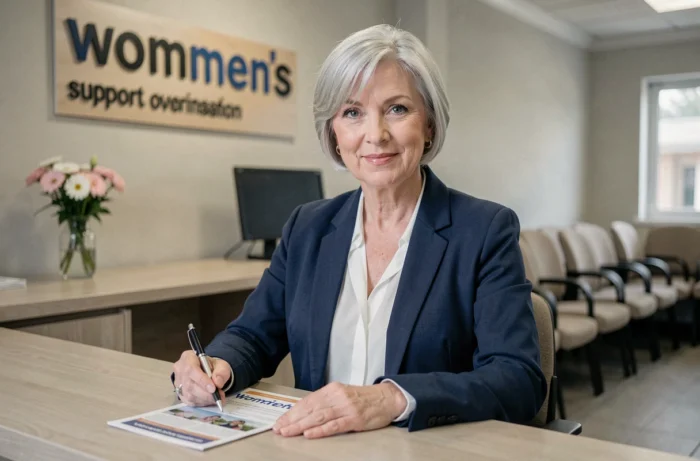
The quality of the first exchange determines the speed of the response. We observe that requests made in a precise manner lead to quicker appropriate guidance.
Before calling or visiting a clinic, gathering the following elements speeds up the process: nature of the facts experienced, approximate date, existence or not of a filed complaint, and administrative situation (residence permit, address). This information is not mandatory to receive support, but it allows the professional to immediately target the relevant service.
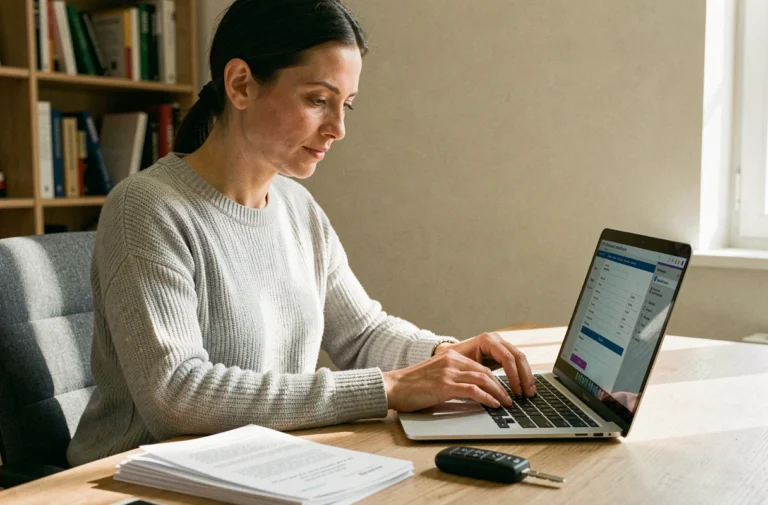
The first contact can also be made in writing. Most associations have an online form or a dedicated email address. This channel is suitable for women who cannot safely call from their home. Some structures even offer real-time chat, accessible from a browser without the need to install an app.
A point often overlooked: anonymity is guaranteed during the first contact with almost all of the mentioned services. Providing one’s identity is only required when initiating a formal legal process. This guarantee removes a major barrier for women who hesitate to take the step forward.